
Can You Build Tolerance to Ayahuasca?
If you are considering attending an ayahuasca retreat — or if you have already been to one and are wondering about returning — a natural question arises: can you build up a tolerance to ayahuasca? Will drinking the medicine repeatedly make it less effective? Will your third ceremony be weaker than your first?
These are practical, reasonable questions. And the answers are more nuanced — and more reassuring — than you might expect.
The Pharmacology of Ayahuasca Tolerance
Ayahuasca’s primary psychoactive component is DMT (dimethyltryptamine), which acts on serotonin receptors — particularly the 5-HT2A receptor — in the brain. Research into DMT tolerance is still in relatively early stages, but what we know suggests that DMT does not produce the kind of tolerance associated with many other substances.
Unlike opioids or benzodiazepines, which require increasingly higher doses over time to produce the same effect, DMT appears to have a different profile. Some research suggests that short-term tolerance to DMT can develop — meaning that if you were to take it multiple times in rapid succession within a single day, the effect might diminish. This is sometimes called tachyphylaxis.
However, this short-term effect is not clinically significant in the context of ayahuasca retreats, where ceremonies are typically held every other night with rest days in between. The spacing built into well-designed retreat programs is not arbitrary — it reflects both traditional wisdom and pharmacological common sense.
What Traditional Shipibo Wisdom Says
In the Shipibo tradition of the Peruvian Amazon, ayahuasca is understood not as a chemical acting on receptors, but as a living intelligence with its own agenda. The maestros who guide ceremonies at Nimea Kaya have worked with this medicine for decades. Their experience is consistent: the medicine gives each person what they need, ceremony by ceremony.
From the perspective of traditional healing, the question of tolerance misses something important. The medicine is not a fixed dose producing a fixed effect. It is a relationship. And like any relationship, it deepens over time.
Many experienced practitioners report that their later ceremonies are not weaker — they are different. The medicine seems to know what has already been addressed and moves deeper into what remains. This is not tolerance. This is the work progressing.
Why Multi-Ceremony Retreats Work So Well
The structure of Nimea Kaya’s 7 and 9-day retreat programs is designed with exactly this in mind. Having multiple ceremonies within a single retreat is not about doing more for the sake of it. It is about allowing the healing process to unfold in layers.
The first ceremony is often about opening — the body and psyche meeting the medicine, surrendering to the process, clearing the most immediate material. The second ceremony can go deeper, following the thread of what was started. The third and fourth ceremonies (in a 9-day retreat) often carry participants into territory they could not have accessed in a single night.
This is one of the key reasons we are so committed to multi-day retreat formats. Real healing takes time. It cannot be rushed. And you cannot get what a week in ceremony offers from a single experience, no matter how powerful.
Experience the cumulative power of multiple ceremonies in the safety of a traditional Shipibo container. View our 7 and 9-day retreat packages — and discover why a multi-ceremony retreat is the most transformative option.
What About Returning Guests?
A significant portion of Nimea Kaya’s guests are returning participants — people who came once and felt called back. This is a common pattern in serious plant medicine work. People return not because the medicine stopped working, but because the journey continues.
Many returning guests report that subsequent retreats open entirely new dimensions of their healing journey. Issues they thought were resolved resurface with new depth. New areas of their life come into focus. The medicine meets them exactly where they are, not where they were.
Are There Interactions or Contraindications?
Tolerance is one concern. Contraindications are another — and considerably more important. Ayahuasca contains MAOIs (monoamine oxidase inhibitors), which have serious interactions with certain medications, particularly SSRIs, SNRIs, and some psychiatric medications. It is also not appropriate for people with certain cardiac conditions, a personal or family history of psychosis, or certain other health factors.
At Nimea Kaya, every applicant completes a thorough health screening before being accepted into a retreat. This is not a formality — it is how we ensure that every guest is safe and appropriately prepared for the experience they are about to have.
Please do not attend any retreat that does not conduct a rigorous pre-screening process.
Practical Tips for Getting the Most from Each Ceremony
Whether it is your first or your fifth ceremony, there are things you can do to support the depth and effectiveness of your experience. Adhering to the dieta — the dietary and lifestyle protocol recommended before ceremony — is essential. This typically means avoiding alcohol, red meat, pork, fermented foods, and recreational drugs for at least two weeks prior.
Setting a clear intention before each ceremony also matters. Not a demand or an expectation, but a genuine question, a direction, an openness. The medicine is more likely to meet you in the specific terrain of what you bring to it.
And perhaps most importantly: show up willing to be surprised. The medicine rarely goes where you expect it to go. Releasing expectations is itself a form of preparation.
The short answer to whether you can build tolerance to ayahuasca: in a clinically meaningful sense for retreat-style use, no. The medicine continues to work, and in experienced hands with proper spacing, it typically deepens rather than diminishes.
The more interesting question is not about tolerance at all. It is about what you are ready to receive.
Ready to Begin Your Journey?
Join a multi-ceremony retreat at Nimea Kaya — 7 or 9 days of deep healing in the Peruvian Amazon with traditional Shipibo healers. Apply now at nimeakaya.org
About the Author – Jill Levers
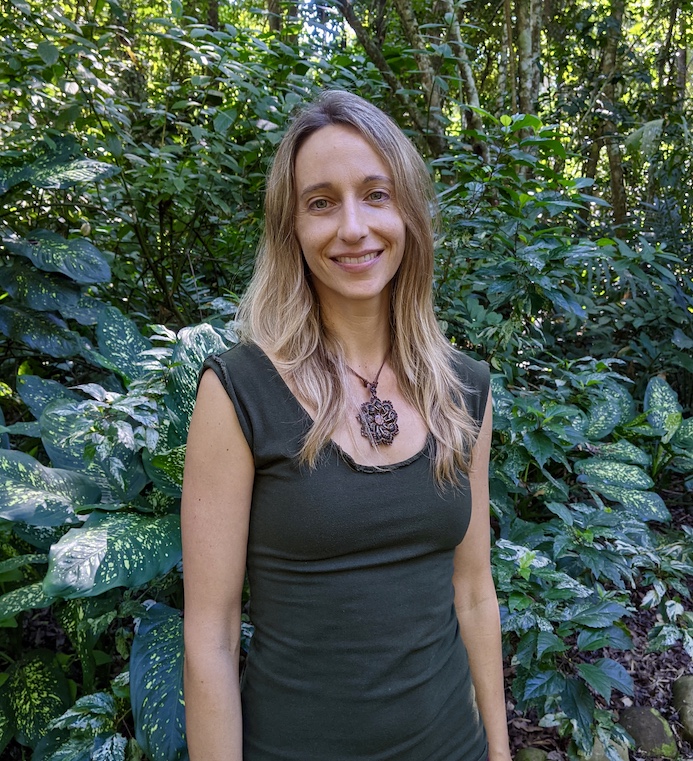
Jill Levers has been passionately writing about Ayahuasca for nearly 20 years, sharing her insights and experiences to inspire and educate others about its profound healing potential. Ayahuasca has played a transformative and central role in her life and work. Her first encounter with sacred medicine in Peru in 2007 marked a profound turning point in her spiritual journey. During her second ceremony, Jill felt a deep calling from Ayahuasca to dedicate her life to helping others heal and transform.
This experience inspired her to co-found the Tierra Vida Healing Center in 2008, which later evolved into the Nimea Kaya Healing Center in 2013. For over 17 years, Jill has served as a bridge between the Western world and the traditional Shipibo culture, organizing Ayahuasca retreats, assisting guests with integration, and supporting individuals on their paths to personal growth and healing.
