
Why Surrendering to Ayahuasca is the Best Approach for a Successful Experience
There is a moment in nearly every ayahuasca ceremony where the medicine presents you with a choice. The experience is intensifying. Something uncomfortable — physical, emotional, or psychological — is rising to the surface. The ordinary mind responds the way it always does: it tries to manage. It tries to control. It braces, reasons, negotiates, or runs.
This is the moment that determines everything about the experience that follows.
The single most important thing you can bring into an ayahuasca ceremony is not courage, or readiness, or even the right intention. It is the capacity to surrender — to fully trust the medicine and allow it to do what it came to do.
This is easier to say than to practice. But understanding why surrender is so essential, and what it actually looks like in ceremony, can make all the difference between an experience that heals and one that simply challenges. Before we go further, if you are entirely new to what an ayahuasca ceremony involves, our Ayahuasca Ceremony page offers a grounding overview of what to expect.
What Resistance Actually Does in Ceremony
When someone resists the ayahuasca experience — when they fight what is arising, clench against the intensity, or try to think their way out of where the medicine is taking them — what happens is not that the experience becomes easier. What happens is that it loops.
This is one of the most consistent observations from experienced practitioners and healers who have guided thousands of ceremonies: what you resist, persists. Energy that is not allowed to move through you gets caught. It circles. It intensifies. The person can become trapped in a recursive cycle — the same sensation, the same image, the same feeling — repeating and amplifying, unable to resolve.
This looping is not a punishment. It is the medicine waiting. It cannot complete its work while the person is blocking the very passage it needs to move through. The way out of a difficult loop in ceremony is almost always the same: stop fighting, soften, and let go.
Experienced healers at Nimea Kaya know this pattern well. When a guest appears to be caught in resistance, the maestros’ icaros will often shift to songs specifically intended to ease and open — to invite the surrender that allows the work to continue. You can learn more about our Shipibo healers on our About Our Team page.
Trust as the Foundation of Healing
Surrender is not passive resignation. It is an active, courageous choice to trust — to trust the medicine, to trust the healers holding the ceremony, and to trust that what is being asked of you, however difficult it feels in the moment, is in service of your healing.
Ayahuasca is a highly intelligent plant spirit. This is not poetic language — it is the lived experience of the thousands of people who have worked with her, and of the indigenous traditions that have understood and worked with this intelligence for centuries. The medicine knows where to take each individual on their unique journey of healing. It does not repeat the same journey twice. It works with the specific energetic, emotional, and psychological landscape of the person in front of it.
Trusting this means trusting that however difficult the experience feels, the medicine is doing what is necessary — helping to heal, to release old trauma, to reset the nervous system, to clear blockages that may have been accumulating for years. To understand the broader scope of what ayahuasca healing involves, visit our Ayahuasca Healing page.
The Journey Is Not Meant to Be Easy
This is something we say clearly at Nimea Kaya before every retreat, and it is worth saying clearly here: the ayahuasca journey is not meant to be comfortable. It is meant to be real.
The most profound healing and transformation that take place in ceremony almost always occur in the most challenging passages — the moments of intensity, confrontation, emotional rawness that feel, in the moment, like they might be too much. They are not too much. They are exactly what is needed.
Every person who has come through one of these difficult ceremonial passages will tell you the same thing: it was hard, and it was necessary. And on the other side of it was something they could not have reached any other way.
The ceremony asks something of you. It asks you to meet it fully — not to perform wellness or spiritual achievement, but to be genuinely present with what is arising, including the parts that are difficult, frightening, or painful. This is what makes it transformative rather than merely intense. Read real accounts from guests who have walked this path on our Testimonials page.
Understanding the Recapitulative Nature of Healing
One of the most important things to understand about how ayahuasca works is that healing on this level is fundamentally a recapitulative process: you experience that which you release.
This is not the same as reliving old trauma in the way one might fear. A person who carries unresolved grief does not necessarily find themselves watching a mental replay of the experience that caused it. The process is more energetic than narrative — it operates at the level of the body and the nervous system rather than purely through the story-making mind.
What this means in practice is that the process of releasing something — old grief, old fear, old shame, stored trauma in the body — can be intense on both a somatic and psychological level, even when no clear memory or story is attached to it. Shaking, crying, physical purging, waves of emotion that feel overwhelming and then suddenly resolve — these are not signs that something is going wrong. They are signs of the process working. The release is the healing.
The Role of the Purge
In Shipibo tradition, purging in all its forms — whether physical vomiting, tears, laughter, or trembling — is considered sacred. It is not a side effect to be managed. It is the medicine moving through the body and removing what no longer belongs there.
Many guests at Nimea Kaya report that the moments immediately following a purge are among the most profound of the entire ceremony: a sudden lightness, a sense of clarity, an emotional openness that was inaccessible moments before. The body has released something. The way forward is clear.
Ready to experience the depth that becomes possible when you truly surrender? Experienced Shipibo healers at Nimea Kaya guide you through every challenging wave. Explore our 7 & 9-day retreat programs — or check our upcoming retreat dates and prices to find the right time for you.
Every Journey Is Unique
One of the things that makes surrender easier is understanding that there is no correct ayahuasca experience. There is no template to match, no milestone to reach, no vision you are supposed to have.
The medicine works with each person according to their own specific energetic landscape — their history, their wounds, their patterns, the particular configuration of what needs to move and be cleared. Two people in the same ceremony can have experiences so different that they might seem to have taken entirely different medicines.
Everyone’s journey is deeply unique and personal to how they process energy. If you have questions about what to expect or whether this is right for you, our FAQs page is a helpful resource — or feel free to reach out to our team directly.
How to Cultivate Surrender Before You Arrive
Surrender is a skill. Like any skill, it can be cultivated before you need it most. The following practices, done in the weeks and days before your retreat, can meaningfully shift your capacity to let go in ceremony.
Cultivating a Relationship with Ayahuasca
Intentionally cultivating a relationship with the Spirit of Ayahuasca in the weeks leading up to ceremony will be highly beneficial. Speaking to her as if she was a loving grandmother, sharing your intentions and how you would like to see your life transformed afterwards. It can be incredibly helpful to drop into the heart space and to FEEL what it is like to fully trust Ayahuaca. To feel her love for you and her desire to help you heal. Then you can remember this feeling of trust in ceremony when the moments arise where surrendering is necessary.
Meditation
A daily sitting practice — even ten or fifteen minutes — teaches the nervous system the experience of not-doing. Of being present without managing. Of watching thoughts and sensations arise and pass without needing to respond to each one. This is exactly the internal posture that serves surrender in ceremony.
Breathwork
Breathwork practices access the same somatic channels the medicine works through. Practicing allowing the breath to move freely, without holding or restricting, builds the body’s tolerance for intensity and its capacity for release. At Nimea Kaya, breathwork is integrated into our retreat itinerary specifically because of its role in preparing participants to move with the medicine rather than against it.
The Dieta
Following the pre-ceremony dietary protocol faithfully — typically two to four weeks before arriving — is itself a form of surrender practice. Choosing simplicity over convenience, clearing stimulants and alcohol from your system, and reducing sensory noise all attune the body and nervous system for the work ahead. Our full Ayahuasca Diet guide explains everything you need to know about preparing properly.
Setting an Intention of Openness
Hold your intention lightly — as a direction of inquiry rather than a requirement. The medicine is more likely to meet you in the specific terrain of what you bring to it when you arrive open rather than demanding.
What Surrender Looks Like in the Ceremony Itself
In practice, surrender in ceremony often looks like this: the experience becomes difficult. The mind starts to grasp. And then — whether through remembering, through the icaros of the healers, through grace — the person softens. They stop trying to make the experience different from what it is. Coming back to the awareness of the breath can be extremely helpful. Remembering and repeating a mantra such as: “I trust you Ayahuasca. I surrender and allow you to do what is needed for my healing.”
And the medicine moves and the release takes place.
Often this is accompanied by a physical sensation of something shifting — a release of tension held in the body, an emotional wave that crests and breaks and resolves into stillness. The difficult passage opens into something on the other side: clarity, peace, a depth of experience that was inaccessible while the grasping continued.
The more one can surrender to and allow for the experience to unfold, the deeper the healing can reach. Ayahuasca is ready to take you as deep as you are willing to go — not through force, but through the opening that becomes possible when you stop holding yourself closed.
What you receive in ceremony is only the beginning. How you tend to those insights afterward — through journaling, meditation, movement, and community — determines how deeply the transformation takes root. Our dedicated Ayahuasca Integration page offers a thorough guide to this essential next phase.
Ayahuasca is one of the most intelligent, most demanding, and most compassionate healing forces available to human beings. It asks only one thing of the person who comes to it: trust.
Trust that it knows where you need to go. Trust that the difficulty is the medicine. Trust that on the other side of what feels unbearable is exactly the opening you came for.
Come with an open heart. Come willing to be moved. Come ready to let go of what you have been carrying. The medicine will do the rest.
Ready to Begin Your Journey?
Take your healing journey deeper in the safety of a traditional Shipibo ceremony in the Peruvian Amazon. Apply for a Nimea Kaya retreat here— or browse our 7 & 9-day retreat overview to learn what the full programme includes.
About the Author – Jill LEvers
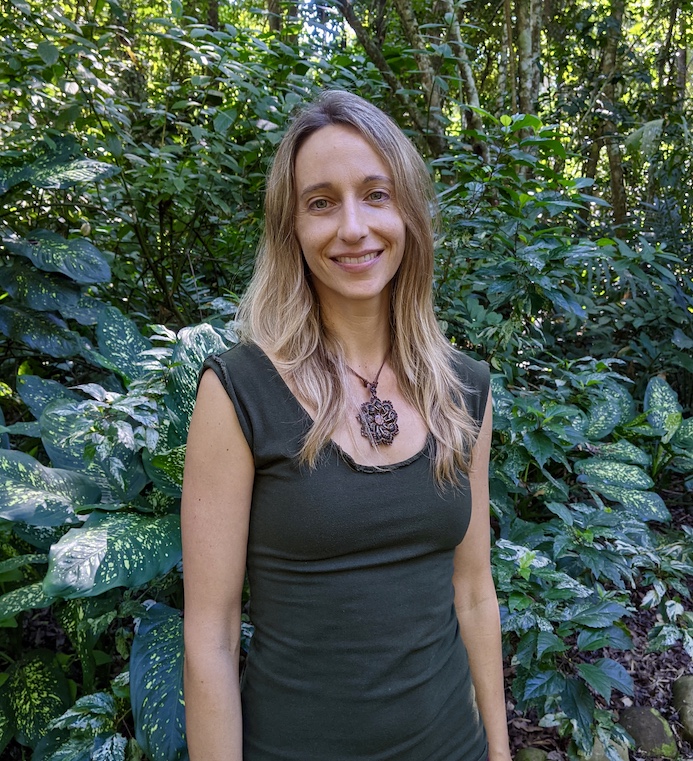
Jill Levers has been passionately writing about Ayahuasca for nearly 20 years, sharing her insights and experiences to inspire and educate others about its profound healing potential. Ayahuasca has played a transformative and central role in her life and work. Her first encounter with sacred medicine in Peru in 2007 marked a profound turning point in her spiritual journey. During her second ceremony, Jill felt a deep calling from Ayahuasca to dedicate her life to helping others heal and transform.
This experience inspired her to co-found the Tierra Vida Healing Center in 2008, which later evolved into the Nimea Kaya Healing Center in 2013. For over 17 years, Jill has served as a bridge between the Western world and the traditional Shipibo.
