
Is Ayahuasca Legal in the US?
Last Updated: Aug 2026
No, ayahuasca is not legal in the United States under federal law.
If you’ve been curious about ayahuasca for its potential for deep healing and spiritual transformation, and you’re wondering whether it’s safe or legal to participate in a ceremony without leaving the country, this guide breaks down exactly where things stand — federally, state by state, and what the real risks are if you attend a ceremony stateside.
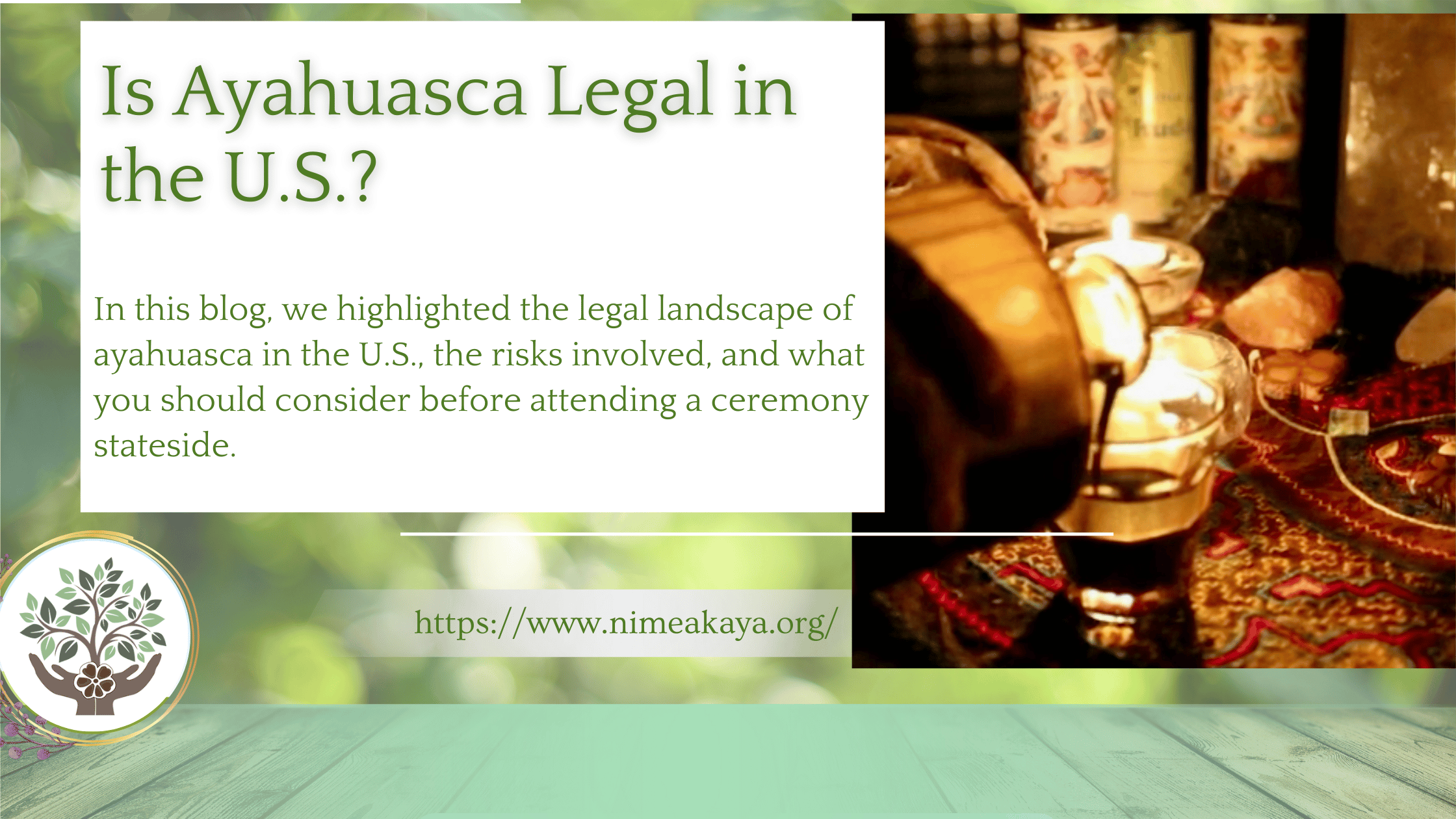
In this blog, we’ll try to highlight the legal landscape of ayahuasca in the U.S., the risks involved, and what you should consider before attending an ayahuasca ceremony stateside.
What Is Ayahuasca?
Ayahuasca, a powerful plant-based brew with deep roots in Amazonian shamanic traditions, has gained popularity in the U.S. for its profound spiritual and psychological effects.
But despite its growing acceptance, the legal status of Ayahuasca remains complex. If you’re considering participating in an Ayahuasca ceremony in the U.S., it’s crucial to understand the federal and state laws surrounding its use.
The Federal Legal Status of Ayahuasca
Despite the growing awareness of Ayahuasca’s therapeutic benefits, U.S. laws still prohibit its use outside of specific religious exemptions. This means that attending an Ayahuasca ceremony in the U.S. could put participants at legal risk.
Additionally, underground ceremonies may lack proper safety protocols, experienced facilitators, or the deep-rooted traditions that make this sacred medicine so powerful.
In the U.S., DMT is classified as a Schedule I controlled substance under the Controlled Substances Act. This means that, under federal law, it is illegal to manufacture, distribute, possess, or consume DMT-containing substances, including Ayahuasca. However, there are some exceptions based on religious freedom.
Religious Exemptions: A Legal Exception
Despite its Schedule I classification, certain religious organizations have successfully argued that Ayahuasca use is protected under the Religious Freedom Restoration Act (RFRA). Two key cases have shaped the legal landscape:
1. The União do Vegetal (UDV) Case – In 2006, the U.S. Supreme Court ruled in Gonzales v. O Centro Espírita Beneficente União do Vegetal that members of the UDV, a Brazilian-based religious group, could legally use Ayahuasca as part of their religious practices.
2. Santo Daime Case – In 2009, a federal judge in Oregon ruled in favor of Santo Daime, another Brazilian spiritual group, granting them similar legal protections to use Ayahuasca in their religious ceremonies.
These rulings have allowed a few religious organizations to legally use Ayahuasca in the U.S., but the exemptions apply only to officially recognized groups.
Individuals outside these groups who possess or distribute Ayahuasca could face legal consequences. Considering the legal risks that persist, those involved with Ayahuasca should understand both federal and state laws.
Ayahuasca Legality by Geographical Regions
| Legality Status | Countries |
|---|---|
| Illegal | France, Denmark, Germany, Ireland, Netherlands, Norway, Sweden, Italy, Russia |
| Illegal except with Religious Exemption | United States, Canada |
| Legal | Peru, Colombia, Brazil, Ecuador, Bolivia |
| Decriminalized or Controlled | Chile, Portugal, Spain, Romania, Israel |
| Unregulated or Status Unknown | Costa Rica, Australia, Argentina |
State Laws: A Patchwork of Regulations
While federal law is clear about the illegality of DMT, state laws vary. Some states strictly enforce federal laws, while others have more lenient approaches to psychedelics. Here’s a look at the landscape:
| State | Legal Status |
|---|---|
| Oregon | Personal possession decriminalized; no licensed retreats or paid ceremonies |
| Colorado | Personal use decriminalized (2022); no licensed retreats or paid ceremonies |
| California | Illegal statewide; personal possession decriminalized in several cities |
| Florida | Illegal; no state or local decriminalization |
| New York | Illegal; no decriminalization, no reform bills passed |
| All other states | Illegal outside a recognized religious exemption |
Risks of Unregulated Ayahuasca Ceremonies
Due to legal gray areas, underground Ayahuasca ceremonies operate in various parts of the U.S. Some are facilitated by experienced shamans, while others lack proper safety measures. Attending an unregulated ceremony poses risks such as:
● Legal Consequences – Possession or participation could lead to legal trouble if authorities crack down on unauthorized ceremonies.
● Health Risks – Ayahuasca is a potent psychoactive substance that can cause adverse reactions, particularly when used in unsafe settings.
● Fraud and Exploitation – The rise in demand has led to unqualified facilitators offering Ayahuasca experiences, sometimes at high prices, without proper knowledge or ethical practices.
Frequenly asked questions
No, ayahuasca is not legal in the United States under federal law. It contains DMT, a Schedule I controlled substance, making possession, distribution, and use illegal outside of narrow religious exemptions.
Ayahuasca retreats held outside the US — such as in Peru, where ayahuasca is legal and traditionally used — are legal under local law. It’s specifically bringing ayahuasca into or consuming it within the US that carries legal risk, not attending a retreat abroad.
Ayahuasca is legal in several South American countries, including Peru, Brazil, and Colombia, where it’s recognized as part of traditional and religious practice. In the US, UK, and Australia, it remains illegal outside specific religious exemptions.
No, ayahuasca is illegal in California under both federal law and state law, which does not provide a specific exemption beyond the federally recognized religious exemptions available nationwide.
Only two US-based organizations — the União do Vegetal (UDV) and Santo Daime — currently hold federal court exemptions under the Religious Freedom Restoration Act. These protections apply only to their recognized members, not the general public.
Yes, ayahuasca is legal in Peru, where it’s recognized as part of the country’s cultural and spiritual heritage and is traditionally administered by trained Shipibo shamans. This is one reason retreats like Nimea Kaya operate in Peru rather than the US.
Future Outlook: Will Ayahuasca Become Legal in the U.S.?
The conversation around psychedelics seems to be gradually shifting, with increased research highlighting the potential benefits of substances like Ayahuasca for mental health and spiritual growth.
Movements advocating for psychedelic-assisted therapy and religious freedom could influence future legislation. Religious exemptions may also expand, and ongoing research on its therapeutic benefits could influence policy changes. However, full legalization still remains uncertain.
A Safe and Legal Alternative: Nimea Kaya Healing Center in Peru
If you are seeking an authentic ayahuasca experience in a safe, legal, and traditional setting, Peru is one of the best destinations.
Ayahuasca is not only legal in Peru but is also deeply embedded in the country’s indigenous healing practices and traditions.
At Nimea Kaya, one of Peru’s most respected ayahuasca retreats, you will find a nurturing environment led by experienced shamans who uphold the integrity of this sacred practice. Unlike underground ceremonies in the U.S., Nimea Kaya provides a well-structured retreat with:
● Highly skilled and compassionate facilitators to guide you through your journey.
● A safe, natural setting in the heart of the Amazon, where Ayahuasca has been used for centuries.
● Comprehensive preparation and integration support, ensuring that your experience is meaningful and transformative.
● Ethical sourcing and preparation of Ayahuasca, respecting traditional methods and sustainability.
Why Travel to Peru for Ayahuasca?
Experiencing ayahuasca in its place of origin allows for a more authentic and powerful journey. Peru offers not just legality but also an environment rich in the wisdom, expert practitioners and traditions that have surrounded this sacred medicine for centuries.
Nimea Kaya, in particular, is known for its ethical approach, prioritizing the well-being of participants and the preservation of indigenous practices.
If you’re ready for a life-changing experience in a legal and supportive setting, consider making the journey to Peru. Visit Nimea Kaya and embark on a profound journey of healing, self-discovery, and transformation.
About the Author – Jill LEvers
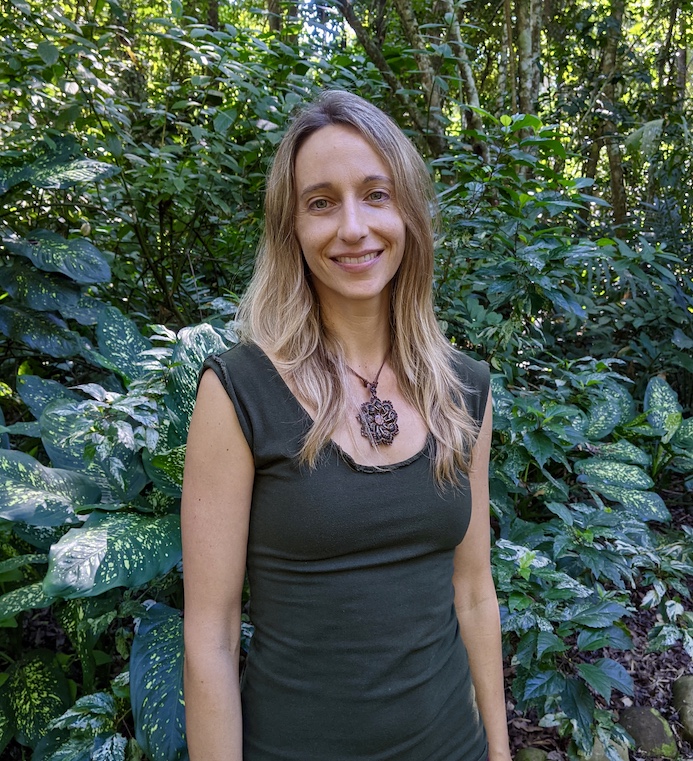
Jill Levers has been passionately writing about Ayahuasca for nearly 20 years, sharing her insights and experiences to inspire and educate others about its profound healing potential. Ayahuasca has played a transformative and central role in her life and work. Her first encounter with sacred medicine in Peru in 2007 marked a profound turning point in her spiritual journey. During her second ceremony, Jill felt a deep calling from Ayahuasca to dedicate her life to helping others heal and transform.
This experience inspired her to co-found the Tierra Vida Healing Center in 2008, which later evolved into the Nimea Kaya Healing Center in 2013. For over 17 years, Jill has served as a bridge between the Western world and the traditional Shipibo culture, organizing Ayahuasca retreats, assisting guests with integration, and supporting individuals on their paths to personal growth and healing.
