
Ayahuasca Hallucinations: Myths, Truths, and What You’ll Actually See
Ayahuasca, a powerful plant medicine originating from the Amazon rainforest, has captivated the curiosity of many spiritual seekers and psychedelic explorers over a period of time. Popularly known for its intense psychoactive properties, Ayahuasca is often associated with visions, spiritual awakenings, and transformative experiences.
However, much of what people believe about Ayahuasca hallucinations is clouded by myths and exaggerations. In this article, we’ll explore the reality behind these visions, discuss the myths, and help you understand what you might actually see during an Ayahuasca ceremony.
What is Ayahuasca?
Ayahuasca is a traditional brew made from the Banisteriopsis caapi vine and the leaves of the Psychotria viridis plant, although variations exist depending on local traditions. The brew contains DMT (dimethyltryptamine), a potent psychedelic compound, which is responsible for the hallucinations experienced during ceremonies. Indigenous Amazonian tribes have used Ayahuasca for centuries as a spiritual and healing tool, believing it connects humans to higher realms of consciousness.
Modern Westerners are increasingly participating in Ayahuasca ceremonies, often seeking emotional healing, personal insights, or spiritual enlightenment. While the allure of “seeing visions” is compelling, it’s essential to understand that Ayahuasca is not a recreational drug but a sacred medicine with profound effects.
Common Myths About Ayahuasca Hallucinations
Before we dive into what people actually see, let’s debunk some common misconceptions:
Myth 1: You’ll See Snakes and Aliens
Many pop culture representations suggest Ayahuasca produces fantastical, cartoonish hallucinations—aliens, mystical creatures, or psychedelic looking snakes. While the mind can indeed generate vivid imagery, most visions are not so literal. Rather than literal depictions, the hallucinations are symbolic, often reflecting your subconscious mind or emotional state.
Myth 2: Ayahuasca Lets You “See the Future”
Some believe Ayahuasca grants prophetic visions. While the experience can feel like glimpsing the future, what you’re likely seeing are symbolic representations of your fears, desires, and past experiences. The insights gained are interpretive, and the “visions” should not be taken as literal predictions.
Myth 3: Everyone Experiences the Same Hallucinations
Ayahuasca is highly subjective. No two experiences are identical, and two people in the same ceremony may see completely different things. Your mindset, intentions, emotional state, and physical health all influence the nature of your visions.
Myth 4: Ayahuasca Hallucinations Are Always Pleasant
Contrary to popular media, not all Ayahuasca experiences are euphoric or beautiful. Many participants encounter intense emotional purging, confronting deep-seated trauma, fears, or grief. Hallucinations/visions can be challenging, but they are often considered part of the healing process.
The Truth About Ayahuasca Hallucinations
While myths often overemphasize the fantastical, the truth is both fascinating and enlightening.
Patterns, Geometry, and Vibrant Colors
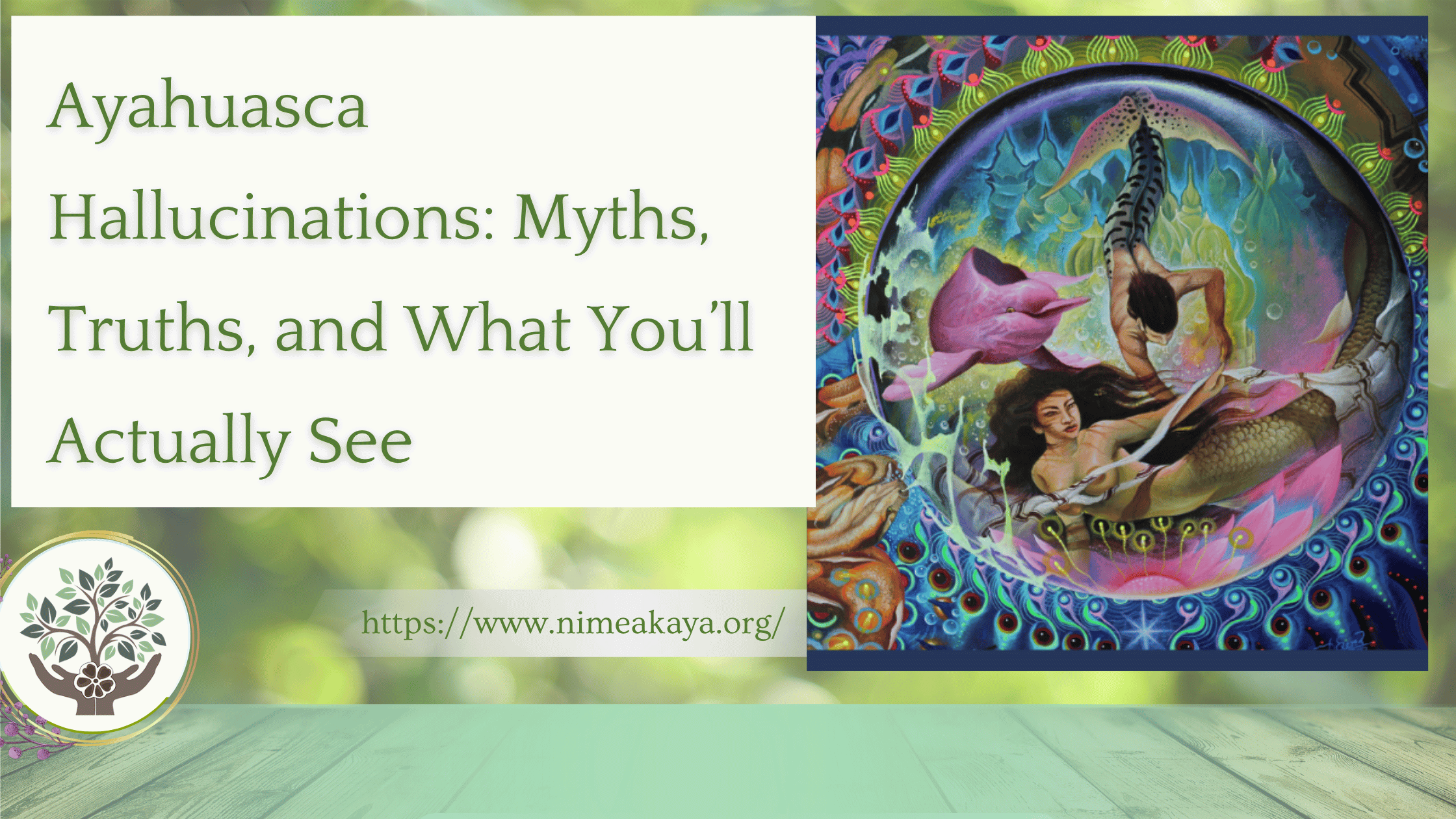
One of the most reported experiences during Ayahuasca ceremonies is seeing intricate geometric patterns, flowing shapes, and vibrant colors. These visuals often appear with eyes closed and can be reminiscent of mandalas, fractals, or natural forms like vines and flowers. Many people describe the visuals as “alive,” moving and shifting in rhythm with their emotions or the music in the ceremony.
Symbolic Imagery
Ayahuasca hallucinations often contain symbolic imagery, rather than literal scenes. For example, seeing a river might symbolize the flow of life or emotions, while encountering animals may represent certain qualities or lessons. These symbols are deeply personal and may relate to your subconscious mind or spiritual journey.
Emotional and Psychological Processing
Hallucinations are not purely visual; they often accompany intense emotional experiences. Participants may relive memories, confront unresolved trauma, or face fears that they have suppressed. This combination of visual and emotional experiences is considered the medicine’s core healing mechanism.
Connection to Nature and the Universe
Many report feeling a profound sense of interconnectedness during Ayahuasca visions. You may experience a deep connection to the natural world, a sense of unity with other people, or the feeling that you are part of a larger cosmic order. These experiences can bring long-lasting insights and changes in perspective.
Altered Perception of Time and Space
Ayahuasca often changes how you perceive time and space. Minutes can feel like hours, and your surroundings may seem fluid or transform into vivid landscapes. This altered perception contributes to the intensity and surreal quality of the hallucinations.
What You’ll Actually See
While experiences vary widely, many participants report:
Complex geometric patterns: Spirals, fractals, grids, or mandala-like imagery.
Nature-related imagery: Animals, plants, rivers, or cosmic elements.
Spiritual or symbolic figures: Ancestral spirits, deities, or guides (often cultural or personal).
Past experiences and memories: Reliving significant moments in life, sometimes with a new perspective.
Emotional and sensory intensities: Sounds may seem amplified, colors more vivid, and emotions heightened.
It’s important to note that hallucinations are highly subjective and influenced by mindset, intention, and the ceremony’s context. Some people may experience barely any visuals and still gain profound insights, while others may have vivid, cinematic visions.
Safety and Precautionary Practices
Ayahuasca is a powerful medicine, and caution is essential:
Always seek for a trained facilitator: Always participate in ceremonies led by experienced shamans or licensed practitioners. They understand dosage, timing, and how to guide participants safely through difficult experiences.
Health considerations: Ayahuasca can interact dangerously with certain medications, particularly antidepressants or drugs affecting serotonin levels. People with heart conditions, epilepsy, or severe mental health issues should avoid Ayahuasca unless under strict medical supervision.
Preparation and intention: Physical and mental preparation, such as fasting and setting clear intentions, can improve your experience. Many recommend abstaining from alcohol, drugs, and certain foods prior to the ceremony.
Integration is key: The insights gained from Ayahuasca may be intense. Working with a therapist, counselor, or integration coach after the ceremony helps to process the experience safely and apply lessons to everyday life.
Avoid casual use: Ayahuasca is not a recreational drug. Ceremonies are sacred practices, and disrespecting the medicine can increase the risk of negative experiences.
Common Misunderstandings
Hallucinations equal enlightenment: Visuals are part of the journey but do not guarantee personal growth or spiritual awakening. The real work is in understanding and integrating what you experience.
Purging is bad: Nausea, vomiting, or crying are often part of the “purge,” a therapeutic release of physical or emotional toxins. While uncomfortable, these are considered beneficial by traditional practitioners.
Everyone will see the same things: As mentioned, experiences are unique and vary from individual to individual. Comparing visions with others can lead to unrealistic expectations.
To Conclude,
Ayahuasca is a complex and potent medicine that can lead to transformative experiences. The hallucinations, while fascinating, are just one aspect of the journey. Most visions are symbolic, deeply personal, and intertwined with emotional and spiritual insights. Approaching Ayahuasca with respect, preparation, and guidance is essential to minimize risks and maximize benefits.
Remember, Ayahuasca is not a recreational psychedelic. It is a powerful tool for self-exploration and healing, and the experiences it brings should be treated with reverence and care.
Disclaimer
Ayahuasca is illegal in many countries and can pose serious health risks if used improperly. This article is for informational purposes only and is not medical advice. Always consult a healthcare professional before considering any psychedelic medicine, and never use Ayahuasca without proper guidance from trained facilitators.
About the Author – Jill LEvers
Jill Levers has been passionately writing about Ayahuasca for nearly 20 years, sharing her insights and experiences to inspire and educate others about its profound healing potential. Ayahuasca has played a transformative and central role in her life and work. Her first encounter with sacred medicine in Peru in 2007 marked a profound turning point in her spiritual journey. During her second ceremony, Jill felt a deep calling from Ayahuasca to dedicate her life to helping others heal and transform.
This experience inspired her to co-found the Tierra Vida Healing Center in 2008, which later evolved into the Nimea Kaya Healing Center in 2013. For over 17 years, Jill has served as a bridge between the Western world and the traditional Shipibo culture, organizing Ayahuasca retreats, assisting guests with integration, and supporting individuals on their paths to personal growth and healing.
